

The Demise of Big Kennels
Can today's smaller breeders be anywhere near as successful?
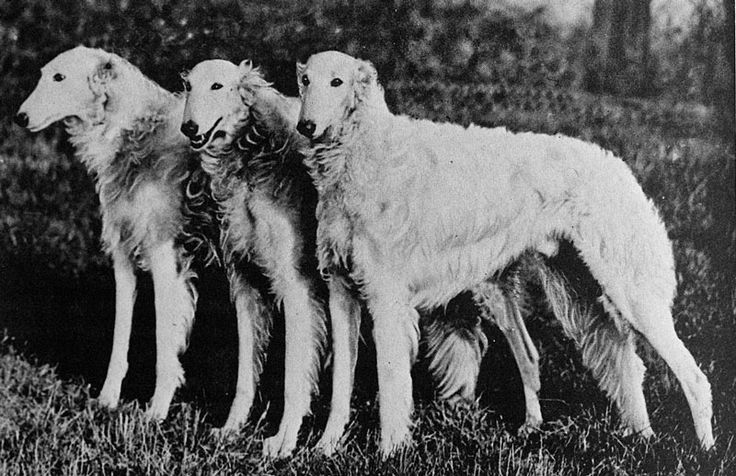
 One of our most successful breeders bemoans the loss of big kennels as a major cause for what he perceives as the weakening of many breeds. Further, he believes that many significant faults become locked in and almost impossible to correct when most of our breeders limit themselves to one or two litters a year at most.
So, I surveyed some top breeders — including past AKC Breeders of the Year — to get feedback on whether they believe a small breeder can successfully produce quality dogs on a consistent basis, and if they can affect the overall breed quality.
Let’s understand that I am talking about the legitimate breeders in our AKC community. One of the results of a Google search on dog breeders lists the question, “Why are people against dog breeders?” The answer given is “Due to poor sanitation, overbreeding and a lack of preventive veterinary care, the puppies frequently suffer from a variety of health issues, creating heartbreaking challenges for families who should be enjoying the delights of adopting a new family member.”
We all know that this is not our community of breeders. There is a vast difference between our breeders and the high-volume solely commercial breeders who breed dogs as a product with profit as the sole objective.
I had the privilege of being good friends with one of those large-kennel breeders of the past — Joyce Nilsen and Charles Oldham of Thenderin Kennels (Irish Setters, Beagles and English Setters). In a 1980 magazine interview, Joyce stated that she averaged owning 35 dogs in her kennel at one time. In this interview, she identified straight, steep shoulders and poor fronts as a major problem with Irish Setters. If this was a problem then — and I believe it probably still is — can we improve this with breeders producing one or two litters a year? Wait – the big kennels were not able to do it either!
A Sporting dog breeder agrees with most of those who replied that to pick a specific number of litters to produce quality would be arbitrary and would not accomplish anything. When asked if she believes a fault can be improved with breeders producing one or two litters a year, she said, “Depends on the fault. Are we talking about a DQ or just something in your line that you want to improve? Heads can be improved in a single breeding — I know that for a fact — but other areas may need several breedings to improve.”
Some of the concepts she keeps in mind when planning a litter are: “Know your standard. Know your pedigrees. I learned the stick concept from [Carmen] Battaglia and I love the concept. Never give up the good you already have. Last, one needs to be brutally honest about the things you need to improve. If you can’t do that, then breeding Fluffy to Muffy will suffice.”
A Sporting breeder-judge replies: “The most important thing is the health history. This is forgotten way too often by the ‘winning breeders.’ If a breeder is honest about their quality and only breeds dogs who are worthy to a pedigree and phenotype to improve their line, you can make positive changes in one litter per year. Not all champions or grand champions or ranked dogs should be bred.”
A breeder-judge of a low-entry breed says, “For my breed, it is scarier and scarier! We are lacking genetic diversity. In the dog-show ring, most likely 50 percent of the dogs are related to just one kennel. I am saddened by the AKC and many who think High Volume equals High Quality.
I breed very specific dogs to other very specific dogs with very specific goals. So, can one litter a year impact things? Hell, yes! One great litter every couple of years can help the breed, and, on the flip side, multiple poor and even average litters are going to likely do much more harm. Bigger is not better for my breed, and maybe the biggest kennels aren’t best for my breed either.”
A multi-group judge – and a Hound specialist – gets close to my thinking when she says, “In today’s world, big kennel operations are few and far between. These kennels do let breeders pick the very best of many options, but does it produce better dogs? [They do] only if you only breed the very best you have to choose from. Smaller operations can do this if they are not [kennel] blind, but often they are. Focus on improving faults and be very mindful when going out of your own line.”
Another Sporting Group breeder-judge also seems to think as I do on this matter: “I have seen breeders who produce a higher number of litters each year where the quality isn’t any higher than other breeders that somehow consistently breed quality animals out of one or two litters a year. I think the key is dog and bitch selection. The sire and dam’s pedigrees and critical evaluation of both animals’ attributes and deficiencies is required. I would offer the caution of ‘do no damage.’ I think there are some good-quality dogs and bitches, but unfortunately the ‘average quality’ hasn’t seemed to rise over the past several years. I suppose larger litters give greater choice in selection for continuing a breeding program, but, again, I don’t necessarily think more is better. Health and temperament are my first considerations from which I will not compromise.” Thank you.
A multi-group judge and breeder of a Non-Sporting breed gives us food for thought: “[The number of litters] depends on the research invested in the breeding. Health testing, phenotype, genotype, line-breeding, desired outcome and the number of puppies in the anticipated breedings all contribute. Too few could easily wipe out a breeding program if a genetic or environmental problem arises.”
Can one or two litters a year improve a breed? “If so, it does it very slowly,” this breeder responds. “Only the breeder knows [his] goals. My goals do not necessarily agree with another responsible breeder. [My breed’s] health is constantly improving with testing and sharing information between responsible breeders. The goal is to maintain breed type, good structure and healthy dogs with good temperament. Sometimes the pendulum will swing one way with a specific breeding. Always strive for balanced excellence. Maybe it is not so much the size of a kennel or number of litters but the quality of the same. [Playing] devil’s advocate – maybe one or two will help your breeding program, but will it help the breed overall?”
The AKC Guide to Responsible Dog Breeding says, “The motto of the responsible breeder of purebred dogs is ‘Breed to Improve.’ Every dog is the best dog in the world to its owner. Responsible dog breeders, however, know to avoid ‘kennel blindness.’ … One of the best ways to get an objective opinion of your dog is to test it against others. Consider attending a dog show to determine how your dog measures up against the best specimens of its breed.”
So, there we have it — the purpose of dog shows is to determine how your dog measures up against the best specimens of its breed. In our rush for rankings, do we sometimes forget that breed judging is the basis for our community?
One Sporting-dog breeder who may be considered a larger “kennel breeder,” says, “I 100 percent agree with that statement. The negative feelings and attacks on larger breeding kennels will be the demise of quality in breeds. Those larger kennels that ‘figured it out,’ that really focus on phenotype and genotype, help lock in type and overall consistency in a breed. There is definitely an importance for the ‘hobby’ breeder who breeds one litter a year or every so often, but it’s very hard to have and see a family of dogs by doing that.
“I think we should always be striving to improve temperaments and health in our programs. Not every breed is good for every home, but when we improve on both of those two areas we can safely, ethically and responsibly place puppies into family pet homes. Two things besides health and temperament that I try and not deviate from are strong fronts and good drive. Heads, rears, length of body, etc., I feel are something you can fix/improve in one generation. Fronts take many and are the hardest thing to get and the easiest to lose. I also feel fronts are the hardest part of an animal to understand. You have layback, lay on, return, proper shoulder angle, proper length of upper arm, etc. Also, drive is something that I won’t deviate from. As a professional retriever trainer, keeping a dog that is willing and has the desire to do the job they were bred to do is very important to me. I don’t just want something that is pretty to look at! Where’s the purpose? Show me why we spent all this time and energy into making this picture as close to the standard as we possibly could get! Show me that form does follow function! I think doing one litter a year can definitely improve faults in someone’s own program but as a whole in a breed they will have very minimal footprint.”
This highly successful breeder has also correctly said,“Breeding isn’t only about throwing two dogs together and hoping it works!”
A Sporting-dog breeder of more than 250 champions also agrees with the original statement: “Consistent quality takes about five litters a year. A breeder must be able to hone their eye to the best and the worst that is in their litters and eliminate the worst. You must be able to make an experimental breeding sometimes to ‘fix’ something. Our pool of top-quality stud dogs is very small now, shipping is almost impossible to do, so people tend to keep their own stud and just keep doing the same thing over and over. You also have too many top breeders ‘aging out.’ It takes years to build a rock-solid producing family of dogs. Very few understand that.
“My breed is at the lowest ebb of all time. Dogs are winning that would never even been in the ring 20 years ago. The loss of the big kennels has put the breed into the hands of breeders who don’t have the knowledge and just want their dogs finished as soon as possible. Way too many dog shows, people building majors to finish dogs. Cutting back on shows and making it harder for mediocrity to win is the only solution I see, but that isn’t going to happen. We have bred … to have excessive hair and it has become too much of a grooming show and not about judging breeding stock to the standard.”
A very successful breeder-judge sums up the viewpoint of those who may only breed one litter a year. “A well-planned breeding can target a fault or two and proper evaluation of the puppies with that goal in mind goes with this philosophy. The perfect dog has yet to walk the Earth. Our breed has very good examples and we can build on that.” The concepts that are always foremost in her mind are “health testing, have specific goals per breeding, good temperaments, and breeders must have bitches.”
So, can a breeder that produces one litter a year still produce quality breed representatives, or are large breeding kennels necessary? Ideally, I think the answer is both, Certainly, large kennels can correct faults quicker because the sheer numbers of what they produce give them options of which dogs to use for future breeding. However, a conscientious, honest “backyard breeder” can contribute to the breed’s positive gene pool if he is objective, and honest in his goals to improve and not just breed to the current fad or winner.
As one of our breeders said, bigger is not necessarily better. The few big kennels that are left — or those who breed very often — do produce quality if they breed from quality. However, there are a number of breeders who consistently produce quality with one litter a year — or less — because they are intelligent and objective in their breeding program. Whether this affects the breed as a whole is questionable.
What do you think?