
Field Day
A PSA for beginning hunters
As more and more gun-dog owners take to the field with their dogs — a positive trend, incidentally — it’s time to explain a few things to new hunters about the realities of things in the field.
If all your experience has been in the show ring or in obedience, rally or agility, the field will be a whole new situation for you unlike anything you’ve done in the past with your dog. But it’s what gun dogs were meant to do, and odds are good that the dog will catch on to all the nuances of field work before you do.
Odds are pretty good that both your dog and you are rookies at hunting, so if you’ve done the sensible thing — which is partner with an experienced hunter — you are already on the right track and at least one step ahead of the game. Also, you have taken your state’s or province’s hunter-safety course and you’ve had some shooting lessons from a qualified instructor. Perhaps you have even put a hunt-test title or two on your dog, but at minimum, he or she has had some quality field training from a professional gun dog trainer.
In the best of all worlds, the experienced hunter you have joined with also has an experienced and well-trained hunting dog to help your dog learn this new game, as hunting is not like hunt tests, although the pointing breed and spaniel tests come fairly close.
Retriever hunt tests, however, should have the word “hunt” in quotes, because that part of the title is, at best, a joke. Retriever tests bear little resemblance to actually hunting either waterfowl or upland birds, but particularly upland birds, and dogs require a considerable amount of additional training to actually be a good hunting dog.

Retriever tests bear little resemblance to actually hunting.
With a bit of luck, though, your hunting partner will have an experienced dog that can act as an “instructor dog” for your dog. We had a really good example of this a couple of years ago. My nephew’s Chesapeake was an experienced waterfowl hunter, but was a total novice as an upland bird hunter. But my Ches, on the other hand, was a very experienced pheasant hunter. After an hour or so of following him around on the shooting preserve where we’re members, watching him find, flush and retrieve several pheasants, my nephew’s dog had pheasant hunting down pat, finding, flushing and retrieving several birds on her own that day.

The best situation is to have a hunting partner who also has an experienced and well-trained hunting dog to help your dog learn this new game.
But it’s a different story for a rookie hunter. It takes more than an hour or two to catch on to the things you’ll need to know or do besides be able to hit whatever you’re aiming at with the shotgun. So here are a few bits of advice that may help you get your relationship with a veteran hunter off on the right track:
• Never brag about your dog before a hunt. Even if your dog is a DC AFC MH, it’s an absolute certainty that if you say anything more than “Oh, he/she’s usually OK,” the dog will go out of its way to prove you a liar and manage to screw things up in more ways than you ever imagined possible. In the same vein, always praise your hunting partner(s)’ dog(s) even if their work would need a considerable upgrade to qualify as godawful. Most hunters would be less offended if you insulted their spouses or their mothers than to have you say anything negative about their dogs.
• Buy your partner’s lunch sometime for absolutely no good reason and remember his/her birthday with a scurrilous card that will make him/her laugh.
• If you are traveling together, pay at least half of the mutual costs.
• Laugh at his/her stories. Even the ones you’ve heard a dozen times.
• If you double on a bird, it’s his/hers, and compliment him/her on a nice shot.
• If he/she screws up or hurts your feelings, forgive them. Hanging on to past wrongs is nothing more than collecting postcards from hell.

If you double on a bird, it’s your partner’s and compliment him/her on a nice shot.
But for all the advantages the come with hunting with someone who is an experienced hunter — and there are many — it’s not all beer and skittles. For one thing, it’s sometimes not easy to grasp the true meaning of the words, phrases and seemingly casual comments used by seasoned hunters when you’re a beginner. Most new hunters mistakenly think they understand what experienced hunters are saying, since they know the accepted definitions of those words and phrases. As a result, they may spend several seasons in a state of confusion. So to help you understand what veteran hunters are really saying, here’s something of dictionary.
“I’ll be ready in a few minutes” — That would seem pretty straightforward, but if you assume so, you’d be dead wrong. It’s probably going to be a good hour or more before you are actually ready to depart for your hunting area. You assumed that when the experienced hunting partner said you’d have to leave by 0400 hours that they meant the trucks needed to be rolling at that time. In fact, at that time of the night, odds are that your experienced partner(s) haven’t actually crawled out from beneath the sheets. Or, if they have, they’re a long ways from being ready to depart for the field.

The dogs knew it’ll be a good hour before any assistance from them would be necessary.
The dogs know better. They haven’t stirred from their beds. They’re secure in the knowledge that they still have a good two hours of snoozing, save for the few seconds it takes to trot from the house to their crate in the truck, before any assistance from them would be necessary, what with driving to the site, looking for the exact area of the field where the geese were feeding the night before, putting out several hundred decoys, setting up the blinds and hiding the trucks. If duck hunting is that day’s activity, they’ll stir additionally just enough to jump down out of the truck and hop into the boat before curling up on their pad and resuming their slumber.

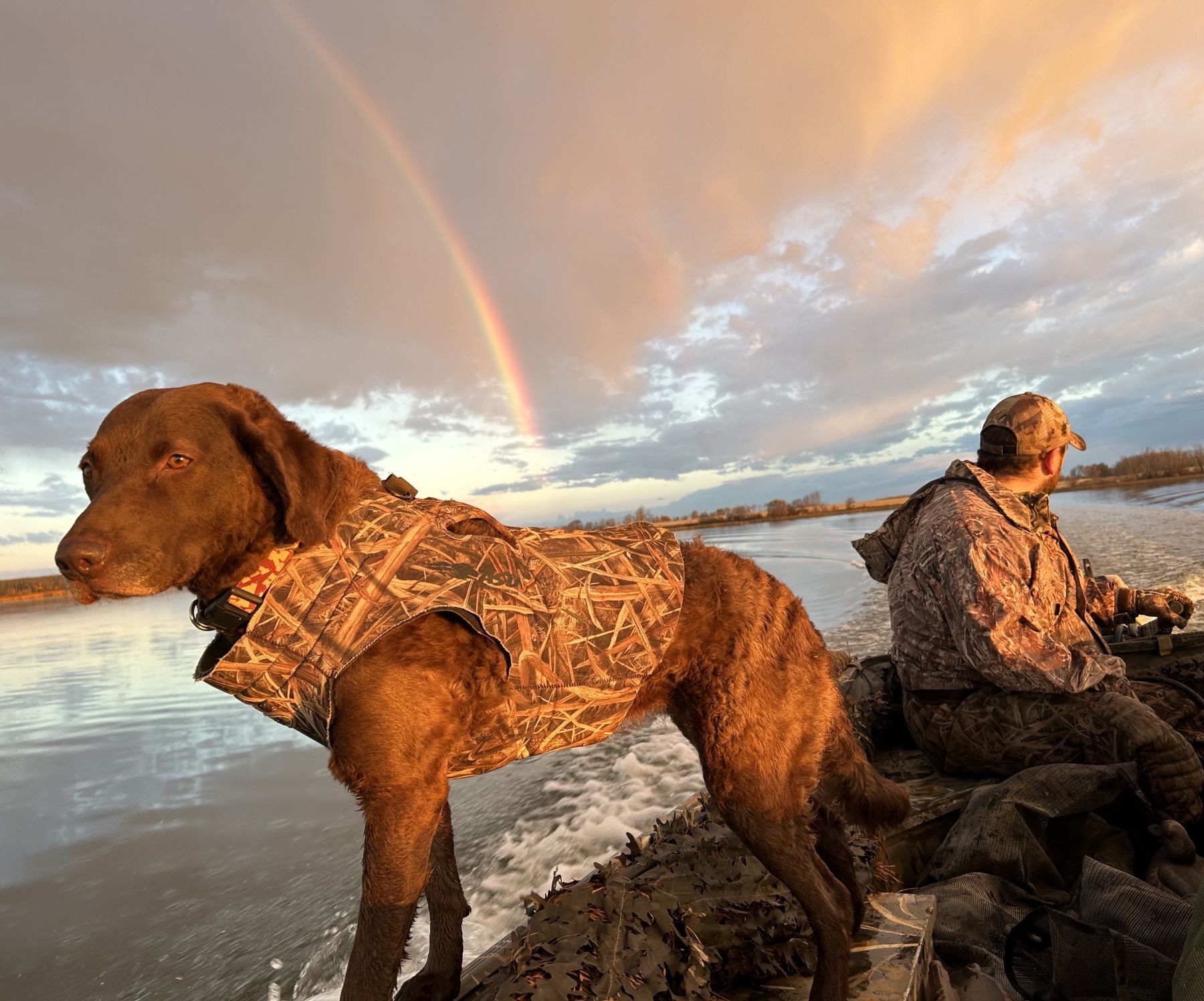
Never brag about your dog before a hunt: The dog will go out of its way to prove you a liar and manage to screw things up in more ways than you ever. (Krista Smude photo.)
While “Be ready in a few minutes” means the same when dealing with experienced upland bird hunters, the one positive is that they’ll keep you cooling your heels at a much more civilized hour while they’re searching for their orange vest and hat, gathering up the shotguns and ammo, getting the lunch packed, the dogs’ water jugs filled and pans found, the dog crates properly bedded and the dogs loaded.
“Not feeling very chipper this morning” or “Feeling really rotten today. Don’t know if I can make it out to the field” — What an experienced hunters says when it’s their turn to get up, make the coffee and start breakfast. Between spasms of body-wracking coughing, long-time hunters may mention that it would be nice if someone would say kind things over their remains if they happen to drop dead from whatever horrible malady is afflicting them while they’re flipping the switch on the coffee maker or looking for the bacon and eggs in the refrigerator.
“Amazing recovery” — What happens when veteran hunters realize someone else has gotten up, started the coffee and has breakfast cooking.
“A fantastic shot” — A veteran hunter’s response when he/she has managed to get a single pellet in a bird practically sitting on the front bead of his/her shotgun.
“Not a bad shot” — What an experienced hunter calls a shot a beginner has just made where the bird was crossing at right angles 60 yards away with its flight path boosted by a gale force wind and the bird fell stone dead.
“Don’t worry, I know how to do this.” — Worry!
“Make a long story short” — The storyteller is about to launch into a tale several thousand words longer than the combined stories in “One Thousand and One Nights.”
“Pure skill and consummate dog work” — How and why the seasoned hunter made a difficult shot over his/her dog.
“A true story” — A collection of the most outrageous, unmitigated and preposterous lies ever assembled by a single storyteller.
“Did anyone think to bring ...” — The veteran hunter has left something vital to the hunt at home.
“A really painful charley horse” — What a seasoned hunter says is killing him/her when it’s time to pick up the decoys out of a particularly mucky marsh or a muddy Saskatchewan wheat field.
“My heart doctor” — A mythical individual referred to when the agony of a charley horse is not enough to spare a veteran hunter from having to pick up decoys out of particularly mucky marsh or a muddy Saskatchewan wheat field.
“Duck!” — The veteran hunter is not directing your attention to a bird coming in range. He/she literally means “duck,” because you’re about to be hit by “incoming” — a bird that’s been hit and is on a trajectory for your head.
“How did you miss that goose hanging like a brown and white balloon 25 yards in front of you? You call that mutt of yours a huntin’ dog?” — You did just fine, and your dog is even better.