

Let’s Hear It for the Old Dogs
Alas, where have all the years gone?
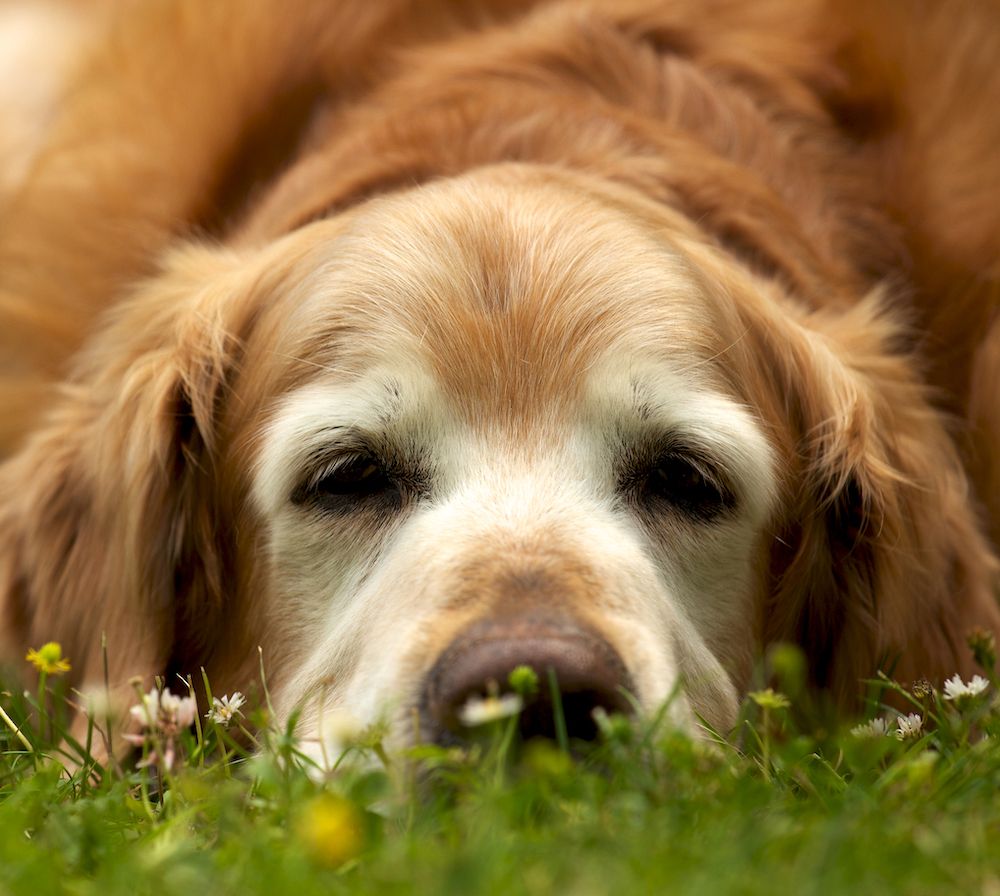
“Alas, Where Have All the Years Gone” is the title of a classic poem by Walther von der Vogelweide in which he laments the passage of time.
The title often runs through my head when I’m doing something with an old dog. It seems like only yesterday that my current dog was a silly puppy and then, suddenly, in an eyeblink, he’s classified by the veterinary profession as a geriatric dog. In fact, when I picked up some anti-arthritic pills the other day and was grumbling a bit about it, his “primary care physician” said, “Well, when dogs get to his age, it’s only natural that they’ll need a little help when they’re working.”
I confess that I’ve always had a soft spot for old dogs, a spot that has gotten even softer as I’ve become pretty much an old dog myself. So don’t expect dispassion or objectivity from me when the subject is old dogs. If they are dogs that are still doing their breed’s work, I love them all and enjoy watching them — even the crotchety, irascible and grumpy ones.

I’ve always had a soft spot for old dogs, a spot that has gotten even softer as I’ve become pretty much an old dog myself.
Older dogs are fully capable of giving us 100 percent, whether we’re hunting or doing obedience, agility or any one of the many dog sports available these days with them. It’s just that they give you that 100 percent in a different, more temperate manner. Gone is the hell-bent-for-leather style of the dog’s youth, when he ran right on the edge of being out of control. Instead, there is an economy of motion, a moderate, controlled pace and a higher level of focus.
It’s true that you have to adjust your expectations a bit with an old dog. You won’t see the same level of effort, amount of vigor or the sort of performance you saw when the dog was in its prime. You also need to use some common sense in what you are asking the dog to do. While their bodies may have changed, the amount of “heart” the dog possesses never does, and unless you stop them, most won’t ever quit, no matter how rough the task becomes.

While their bodies may have changed, the amount of “heart” dogs possess never does, and unless you stop them, most won’t ever quit, no matter how rough the task becomes.
I saw a classic example of an old dog refusing to quit several years ago when one of my hunting partners knocked down a white-fronted goose (specklebelly), which landed fairly close in front of me. Since it was clearly not dead, I shot it again. That appeared to have finished the job, so Bobby, my 11-year-old dog who was mainly on the trip only to do easy stuff, was sent for the retrieve. When he was within about 10 yards of the bird, the goose’s head came up again, and it was off to the races at an angle that made a second shot impossible.
Bobby chased the wounded goose almost all the way across the slough, which was nearly a quarter mile wide, despite my best efforts to call him off the bird until it began diving to escape.
Bobby stayed with the goose for a long time, but never got close enough to dive after the bird, and finally, the goose did not resurface, which meant that Bob had the long swim back with no trophy. Fortunately, while he was on the way back, one of the other hunters in the group shot a snow goose, which he was able to pick up, so the lengthy swim was not a total loss in his view.
I figured that would be the last retrieve of the week for him, as I knew the exertion likely would leave him lame, stiff and fit only for days of rest on the foam pad in his crate. Plus, he was beginning to develop signs of chronic pulmonary obstructive disease, which would hamper his recovery from the long swim. However, I hadn’t reckoned on his toughness and pride, which would not allow him to quit even though he must have been plenty sore because he needed help to get up on the bed in the motel for a couple of nights. Bobby more than earned half of the meatloaf sandwiches in my lunch as he made many retrieves after the aborted goose chase.

It is often the final years of a dog’s active life that we come to treasure the most.
It is often the final years of a dog’s active life that we come to treasure the most. I can’t count the number of times people have told me that old Fido turned into a pretty good hunting dog or obedience dog or agility dog in his later years but that I should have seen him when he was young. He was a hell-raising, wild-as-a-March-hare, out-of-control bird chaser if he was a hunting dog, ran zoomies all over the course if he was an agility dog or had a bag of tricks in obedience that would make David Copperfield green with envy.
One of my dogs for several years was convinced that his full and complete name was Mike-you-son-of-a-bitch-get-in-here because that’s all he heard from me. In his later years, he became a good dog on upland birds, and I thought it was because all my training had finally sunk in. At the time, I was too full of myself to understand that Mike had gotten to the point where experience and the natural moderation of age were what made him a decent bird hunter, and his skills in the field really had very little to do with my training efforts. My brother has often remarked about how much better a couple of his dogs became as waterfowl retrievers when they could no longer hear his shouted commands.
One of the things I love about old dogs is their aura of contentment. They always seem happy because they’re doing exactly what they want, and they make clear that you are the perfect partner. It’s as if they understand their goals and how to achieve them. Even though they may be sagging a bit here and there physically, they have gotten to where they intended to go and they’ve done what they intended to do by the end of the day. They’re relaxed and pleased with life, prudent and calculating in their movements.

It’s as if old dogs understand their goals and how to achieve them.
Old dogs always seem to radiate tranquility and maturity even when they have the hot scent of birds in their nostrils, are hot on the trail of some critter, have buffaloed a herd of cattle or when they’re just playing the clown to entertain you. Every now and then, they look at you, and that look says that in their world, everything is just right. Everything about them — their attitude, posture and their expressions — says that they know they don’t have anything left to prove, that they’ve given you fair trade for all the training and handling expense, all the dog food, all the toys, all the birds and all the trips to the veterinarian.
Another virtue of old dogs is that they seem to understand about the infirmities that come with age. When the pain in arthritic joints or aching muscles says it’s time for a stop and a little rest to relieve some of the pressure on those body parts, the young dogs bounce around with an impatient “C’mon, boss, let’s go. There’s lots more places we need to hunt today” attitude. Old dogs, on the other hand, instantly search out as comfy a spot as they can find for the same sort of rest for themselves. When it’s time to move on, the inevitable moans and groans that accompany getting body parts arranged in their proper position are met by sympathetic looks from old dogs. They understand because they have some of the same aches and pains. Their sympathetic understanding is often accompanied by a rub of their head along your thigh or a gentle nose nudge, as they are totally in sync with not just your moods but your infirmities.
Old dogs make us look good. If you hunt, they know where birds, bunnies, jackrabbits, raccoons or rats and mice like to hang out, and they ignore cover they know won’t produce their quarry. They hit likely objectives and disregard the rest. No matter how experienced a hunter you are, old dogs know a whole lot more about birds and bird hunting, raccoons and coon hunting, small game and small game hunting, and rat and mouse hunting than their human partners. Even if you’ve been hunting for decades, if you pay attention, an old dog will teach you something useful. If you do a sport like agility, they know how to cut corners, take jumps at angles and generally can find the quickest way around a course, usually far better than their handler. Herding dogs getting on in years know livestock, and there is no wasted motion or effort on their part in getting the stock to do their bidding. Old dogs know how to have a good time with you, and that’s what makes their company so pleasant.

If you do a sport like agility, they know how to cut corners, take jumps at angles and generally can find the quickest way around a course, usually far better than their handler.
With old dogs, the amount of time they spend doing some activity doesn’t matter nearly as much as just being there with you. No, they’re not likely to win any field trials, and they probably won’t get much in the way of Bests in Field or High in Trials, but when you are hunting with them or doing some other sport with them that they love, they are all business, and they give you everything they have within their now somewhat limited capabilities. That’s just one more thing that’s so great about hunting with or working with an old dog.
So, the next time one of your dogs that has done a job all his life is nudging double digits in age and starting to slow down a tad, don’t relegate him to a kennel or the couch for his final years. He still has a lot to offer, and the plus is that taking him along and letting him do what he can do will make both you and the dog happy.
Then, instead of the gloomy lamentations of Vogelweide’s poem wandering through your mind, you’ll be able to echo the lyrics of one of Frank Sinatra’s great hits: “Regrets, I’ve had a few, but then again, too few to mention.”
Most likely, if they could talk, old dogs would agree with you.