

The Lowdown on Lice
How to spot and treat these creep-crawlies

Can dogs get lice?
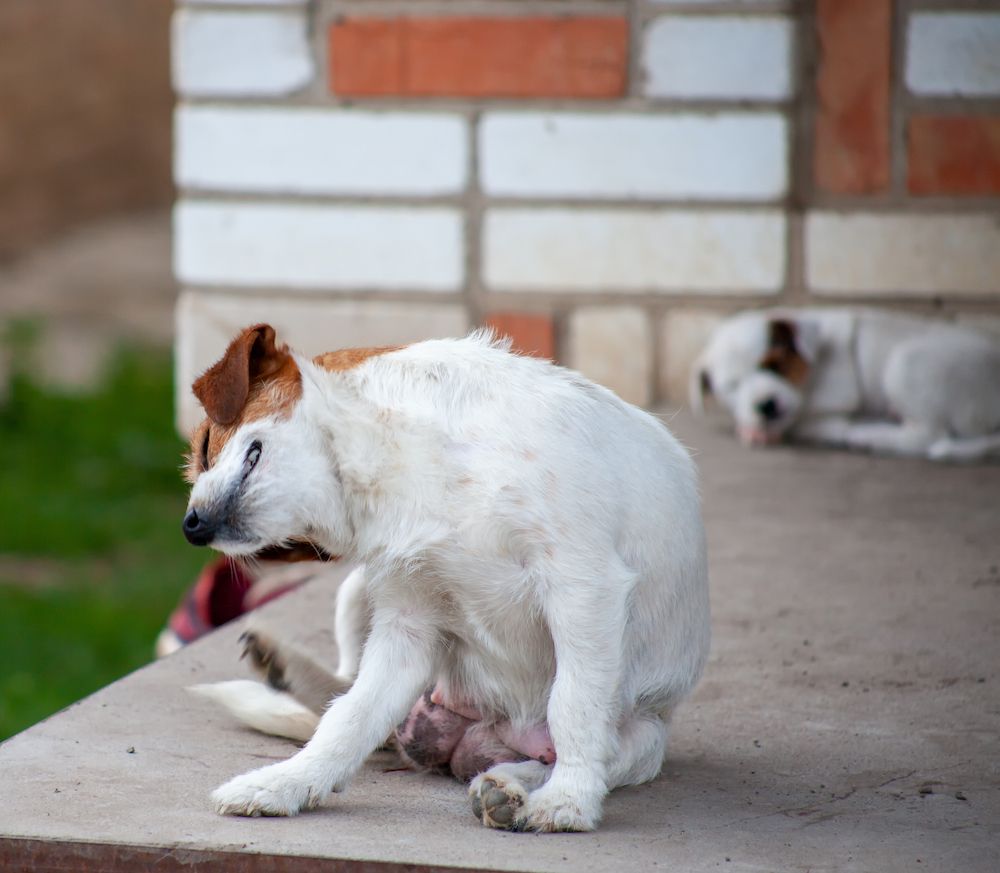
Yes, they can. Lice are a common parasitic infection of the skin in dogs. The medical term for this condition is pediculosis. Nobody wants to see lice on their dog any more than they do on their kids. Lice cause intense scratching and itching. Dogs can go a little crazy with all the crawling and biting that lice do. The good news is that lice rarely cause long-lasting problems.
Lice are small, wingless insects that live on the hair or feathers of animals and people. Like human head lice, dog lice are transmitted in situations where dogs are in close physical contact. The dogs most likely to get lice are those that go to puppy classes, dog shows, doggie day care or on group walks. The lice move straight from dog to dog by direct contact.
There are two general groups of lice that infest dogs — biting or chewing lice and sucking lice. They differ only in how they feed. Biting or chewing lice infest both birds and mammals. They feed mostly on skin debris and the secretions of their hosts. Blood-sucking lice are skin parasites of mammals only.
All lice have powerful claws on all six legs. They use these claws to cling to the hair shafts. Lice are able to hang on tightly enough that even vigorous scratching and biting will not dislodge them.
Unlike fleas, lice live out their entire life cycle on the animal. The adult female lice lay their eggs, which are called nits, and glue them tightly to the hair shafts of the host near the skin. Nits are pale, translucent, and almost oval in shape.
Nymphs hatch from the nits. The immature nymphs look the same as adult lice, only smaller. The entire process from nit to adult takes two to four weeks.
The three species of lice that infect dogs are Linognathus setosus (a bloodsucking louse), Trichodectes canis (a biting louse) and Heterodoxus spiniger (a biting louse that feeds on blood). In severe infestations, dogs can become anemic due to blood loss, especially young puppies. Lice can carry tapeworms, so infested dogs should be treated for tapeworms once the lice are under control.
How would my dog get lice?
Dogs get infected with lice from other infected dogs, either by direct contact, or indirectly through contaminated bedding, clothing or grooming tools. Puppies and older dogs are more prone to lice infestations.
What are the signs that my dog may have lice?
The first signs of lice that most people notice are scratching, biting and rubbing. Most dogs are suddenly and intensely itchy. Dogs with lice often have rough, dry, matted coats. Sucking lice cause small wounds that can become infected.
On close inspection, you might see some small, tan- to medium-brown-colored bugs near the skin. You can tell lice from fleas by the color and the speed with which they move. Fleas are dark brown and fast movers, whereas lice are lighter colored and move sluggishly.
When you part the fur, you can see the lice. Chewing lice are active and can be seen moving through the fur. Sucking lice move more slowly. They are often found with their mouth parts embedded in the skin.
You might also notice the nits on the fur. The empty eggshells look like dandruff. One way to tell is to use a flea comb to collect fur from the suspicious area. If you can shake the fur and the flakes fall off, it is just dandruff. If the flakes stick tight to the fur, they are probably nits.
Can I get lice from my dog?
It is highly unlikely that you would get lice from your dog. Lice are quite species specific, meaning dog lice affect dogs and human lice affect humans. It is possible for a dog louse to get on a person, and it might even bite or try to feed, but it will not produce an infestation. If you see a dog louse on yourself, simply pick it off and crush it, but then check over all your dogs to see where it came from.
What is the best way to get rid of lice?
The treatment of lice is straightforward. Many insecticides kill lice. Most flea shampoos contain pyrethrins or organophosphates, which will treat louse infestations. Topical insecticides like imidacloprid (Advantage) can be applied every two weeks to kill lice. Selamectin (Revolution) is not specifically labeled for lice, but appears to be effective.
Permethrins, which are different from pyrethrins, are also useful insecticides for dogs, but can be toxic to cats. Use extreme caution when applying products that contain permethrins to dogs when there are cats in the home. The permethrins can get onto the cat just by coming in contact with the dog.
As an alternative to insecticides, lime-sulfur dips are effective and non-toxic. They can be safely used on very young puppies. The downside to the lime-sulfur dips is that they may temporarily stain the dog’s coat yellow and they have a horrible sulfur odor. The dips should be repeated weekly for four to six weeks.
Using a fine-toothed comb to remove the nits from your dog’s fur is a tedious process, and it will not kill lice that have hatched. Lice that drop off or are pulled from the host dog die in a few days, but eggs may continue to hatch for two to three weeks. Lice-control treatments should be repeated seven to 14 days after the first treatment. Continue to inspect your dog’s fur daily for at least two weeks after you see the last louse.
Be sure to collect any dead or live lice that you have removed from your dog and dispose of them promptly in a plastic slider bag. Other dogs that have contact with an infested dog should be treated to prevent the spread of lice.
In addition to killing the lice on your dog, wash all bedding in hot water. Dispose of brushes, combs and other grooming equipment, since they may have nits stuck to them that will be hard to remove. Any other items, such as coats, sweaters, collars and leashes, should also be washed and cleaned with hot water.
Do I have to quarantine my dog after I find lice?
Your dog does not have to be confined to the house, but he or she should not come into contact with other dogs until at least four weeks of treatment have been completed. While the insecticides may have killed the adults on your dog, the eggs will hatch and release more nymphs, which are contagious to other dogs.