

What’s in a Name?
Nicknames are an integral — if sometimes embarrassing — part of dog ownership
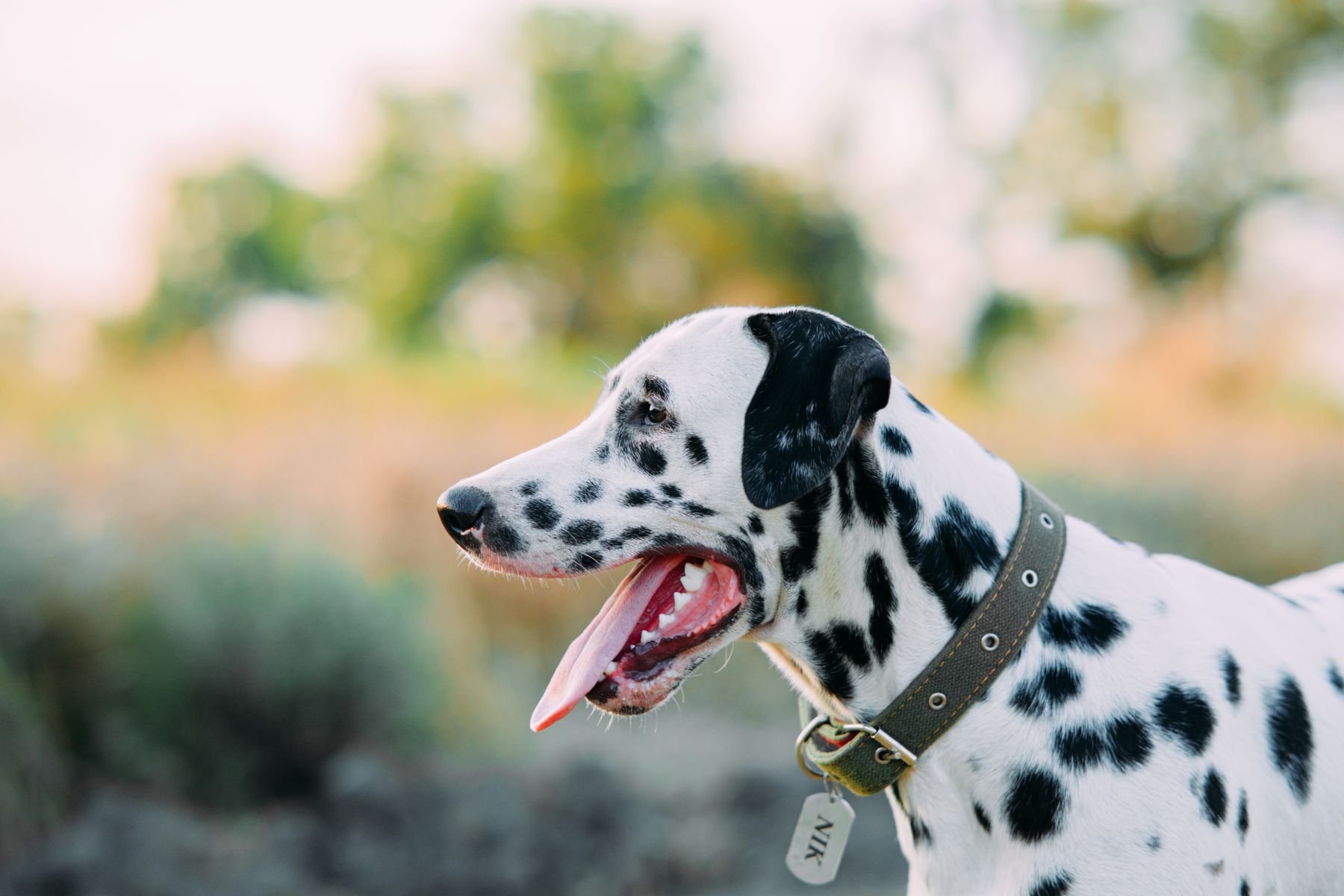
There’s a famous quote in Shakespeare’s “Romeo and Juliet” about names. If I remember my English-lit university courses correctly, it goes something like “What’s in a name? A rose by any other name would smell as sweet.”
The same applies to nicknames. Americans are chronic “nicknamers.” We give them to children, ourselves via computer names, friends, enemies, vehicles, cities and towns. The style and diversity of nicknames are limited only by our imaginations. For better or worse, our nicknaming skills reach their zenith (or, in some cases, nadir) in how we call and talk to our dogs.

Bobby (above), the dog prior to my current pooch, was known to the Canadian Kennel Club as Ch. Sprucegrove’s Probable Cause, CD, JH, WCI. While he was often called Bobby, he also answered to “Bob,” “Bobo,” “Bozo” (when he was being stupid), “Bobby-Bear,” “Bobber,” “Bud,” “Buddy,” “Pal” and “Bob-Man.” One of my other dogs had the call name of “Belle.” But she was often called “Birdo” (from her formal name of Sprucegrove’s Burden of Proof), “Birdy, “Birdwoman,” “Abu, the tiny terrorist,” “Boo,” “BooBoo” and “Boo Babe.”
Dog nicknames are fun because they can be whatever we want them to be. They can be added to a dog’s registered name or be a play on it. They can describe physical traits, heritage or an oddball feature. They can make at least some sense or be total nonsense, be names that we deliberately create or that just pop into someone’s head. We use some of those names in public, some around close friends, and there are some that are reserved for private use that are often so silly we’d be embarrassed to have anyone but the dog hear them. There are also some that are so profane they’d also be an embarrassment if they were used in front of anyone other than a longshoreman, a Marine Corps drill instructor or a Navy master chief. Sometimes they are a combination of silly and profane.

A friend of mine owns and hunts with a really nice and very accomplished Standard Poodle (above) whose official call name is “Lulu.” But my pal’s three-year-old daughter has an issue with pronouncing the letter “L.” Her “Ls” become “Ws” so to her, Lulu is “Woowoo.” Thus, Lulu answers to “Lulu,” “Lu,” “Looie,” “Lu-bear,” “Woowoo,” “Wooie” and “Woo.” Since she also has an uncanny ability to screw up when her owner has the most money and/or bragging rights on the line, she has learned to respond to “DooDoo” (as in “deep doodoo”), “Doofus” and sometimes just plain “Dumbs***,” a name I’ve noticed over the years that has been applied to a number of dogs across the entire spectrum of the 197 breeds recognized by the American Kennel Club.
Whether you admit that your dog has nicknames or not, I’ll bet they do, and you use those names almost as often as you call the dog by its real call name. I’ll also bet that most dog rarely hear their true call names when they’re alone with their owners, and if they do hear them, it’s a signal they’re in deep kimchee, like parents sternly calling misbehaving children James, Samuel or Michael instead of Jimmy, Sammy or Mikey when the kids are behaving.
A U.S. Navy pilot with whom I once spent six days on a survival course when introduced said that I should call him “Bobby,” although his given names were Robert James. But the only person who ever called him Robert James was his mother, and when he heard her say both names, he knew she was going to kill him.
I suspect dogs have a similar response, except in Bobby’s case, he knew when he was in trouble because his call name becomes “bobbydammit,” just as my late upland hunting partner, Bill Baxter’s grand old Brittany Amy, went through life absolutely convinced that her “real” call name was “Amygoddammit.”

One of the real fascinations of this nicknaming business is that the dogs react to almost everything we call them. Certainly they have to hear a nickname a few times, but it doesn’t take them long before “Zoe” (above) responds to “Zo,” “Zo-Baby,” “Zo-Bear,” “Zo-Zo” and “Zamboni,” all names I’ve heard a Curly-Coated Retriever called. She belongs to an ex-college hockey player I know. “Max,” an Airedale belonging to some other folks I know (below), comes when he’s called “Maxie,” “Slapsy-Maxie” (after the long-ago lightweight boxer turned actor, Slapsy Maxie Rosenbloom), “Mac,” “Mack the Knife,” Maxmeister” and a dozen others.

At a stable where I used to keep an off-track Thoroughbred, the “stable dog” was an absolute sweetheart Rottweiler whose actual call name was “Rocco.” But often as not, Rocco (below) was called “Rococo,” “Cacaraka,” “Rocky,” “Rockman,” “Rockhead,” “Rock Candy,” “Rock Hound,” “Rock Bottom” and a “Rock” name or two that are unsuitable for a family publication. Some friends have a really great Bloodhound whose actual name is “Sherlock,” but he also comes when called “Big Nose,” “Nose,” “Snoop,” “Houndini” and “Attila the Hound” or just “Attila.”

Some of the response we get from a dog when we use a nickname is probably due to the fact that we’re usually up close and personal when we first call a dog by that name, or we behave or sound as we do when we call them by their real call name. It’s certainly possible that we also pass on some other signal that tells the dog that he/she needs to do something —come to heel or maybe just saunter over for a pet session. That said, and given that dogs have a sizeable vocabulary to which they respond, it’s still amazing that they so quickly are able to understand the lengthy list of names we give them.
I had to change the name of a dog once that I took back from her first owner. Initially her call name was “Tary,” but that was quickly changed to “Tee,” as she was terrified of her call name. She associated it with abuse from an incompetent professional trainer and when she heard it, she’d run off and hide. It took less than a day and a half with soft tones, praise, pats and treats as rewards for her to learn to enthusiastically come to me when she heard her new call name. Within a couple of weeks, she was happily responding not just to “Tee,” but also to “Tee-Tee,” “Tee-Baby,” “Teapot,” “Teacup” and “Teatime.”
Some dogs absolutely demand nicknames. A really wonderful and multi-titled Brittany that once belonged to a friend of mine was a tad slow about learning to lift his leg. As a consequence, for a while his immature squatting was accompanied by his jet-propulsion adult equipment. The result was a need for frequent baths to remove the deep yellow hue and intense ammonia odor that marked his front paws. This minor failing earned him the nicknames of “Yellowgrass,” “Mellow Yellow,” “Yellow Peril” and “Yellow Dog,” because his owner held the view that all politicians stink. What’s more, the dog answered to all those names.

Some folks I know said that their Rhodesian Ridgeback, whose real name is “Benya” (above), became known as “Hoots,” “Hooter” and “Booby” for a time after she had a litter of pups. To no one’s surprise, she responded to all those different names.
Did and do all my dogs have nicknames? Certainly, and I’d be willing to bet that more than 90 percent of the dogs in this country with a happy, loving home also have nicknames. During my lifetime with dogs, their nicknames probably number in the hundreds. Do I intend to tell you all my dogs’ nicknames? Absolutely not. For one thing, it would be about as interesting as reading the phone book in a major urban area, and for another, some of them are even embarrassing to me.
But if you happen to be afield and you see someone carrying a shotgun spouting what sounds like total gibberish, you may want to hesitate just a bit before using your cell phone to summon law enforcement or call the folks in the white coats. It may very well be that the armed individual spouting gobbledygook is not a danger to either themselves or to society. Rather, the odds are good that it is only some dog person or hunter calling their dog by its nickname.